Friday, 23 September 2011

Natural Treatment of Feather Plucking in Parrots

Is your parrots feather plucking causing you to pull your hair out with frustration? Below are some natural treatments to rehabilitate your pet bird.

As we have learned in the previous article, there are many different causes of feather plucking in parrots. In order to treat your bird effectively, you need to treat the cause and not just the effect. Products such as feather pecking sprays, which have a foul taste, and feather protectors that cover or prevent your bird from reaching his feathers, will discourage or prevent plucking, but do not resolve the underlying cause of the problem and are therefore a short-term fix rather than a long-term solution to the problem. Anyone that owns a feather plucking parrot needs to initially determine whether it is a result of physical stress related to health, diet or hygiene; or whether the feather plucking is as a result of emotional stress resulting from boredom, separation anxiety, loneliness, or due to some dramatic change in your birds environment.

Homeopathic Remedies

Treating your parrot with natural homeopathic remedies is a safe way to tackle feather plucking. Moisturising sprays that contain aloe extracts have natural soothing properties that help relieve skin irritations, and dry skin. Stress can also be treated with homeopathic solutions, such as Bach Flower remedies containing extracts of Passion Flower, Kava Kava or St John's Wort, which are natural sedatives, and have a calming effect on birds. Another natural ingredient that is useful for treating feather plucking that is caused by skin irritations is Grapefruit Seed Extract (GSE), which has natural antiseptic, antibiotic, and anti-parasitic properties.

Dietary Supplements

Natural dietary supplements, such as Vitapet Feather Conditioner are specially formulated and contain a range of essential vitamins to maintain a healthy feather condition. They are particularly useful for birds that are suffering from a vitamin D deficiency due to being fed an unbalanced diet, and as they will aid feather regrowth, they are beneficial for any bird that has plucked out its feathers.

Other Things to Consider

Depending on what is triggering the feather plucking behaviour, a pet owner can take a number of steps to both prevent and cure feather pulling in their pet parrot without the use of medication and drugs. These include the following:
  • Ensure that your parrot gets a healthy, balanced diet to maintain healthy plumage.
  • Keep you bird in a healthy environment, bearing in mind that cigarette smoke and aerosol fumes are toxic and can trigger feather pulling behaviour.
  • Also make sure that your bird is kept in an area that receives adequate light, that he does not get too hot or too cold, and that the humidity is not too dry. Parrots hail from tropical rainforest, and heaters can dry the air in the room. When using heaters, it is recommended that a dehumidifier, or a water feature of sorts, is provided to prevent the air from becoming too dry and thus drying out your birds skin and feather follicles, resulting in irritation and feather plucking behaviour.
  • Your bird needs eight hours of beauty sleep a night. Keep him covered in a quite corner if you plan to party all night.
  • Stimulation is vital, so provide lots of interesting toys and puzzles to keep him occupied and prevent boredom.
  • Social interaction is very important. Preferably let your bird out of his cage to interact with you on a daily basis. Provide other stimulation, such as music, when you are not around so that he doesn't sit alone in a quite house – very dull for a pet parrot.
  • Consider get another parrot to keep your pet company if you work all day and he has to stay at home alone.

By following all the above tips, your bird should be kept happy and content, and should not resort to feather plucking due to health or psychological stress.

Tuesday, 20 September 2011

Feather Plucking in Parrots


Photo: Tim Notari
Feather plucking is a common problem among captive pet parrots. Some species, like the African Grey, Cockatoos, Macaws, and Quaker (Monk) parrots are more inclined to pull at their feathers. The severity of feather plucking can range from feather picking, where the bird just breaks the feathers off resulting in a rather unkempt looking parrot; feather pulling, where the parrot pulls the feathers right out, leaving bald bits of skin exposed; and self mutilation, where the bird tears at its own flesh, resulting in bleeding sores that can easily become infected if not attended to swiftly. Often feather picking, may progress to feather pulling and finally self mutilation, so it is advisable to check this habit as soon as possible to prevent the situation from deteriorating.

Causes
There are several factors that may cause a parrot to begin plucking at its feathers, and these can include both physical and mental stress. Physical stress can be related to an unbalanced diet, external or internal parasites, or allergic reactions to an environmental stimulus or toxin. Due to their high level of intelligence, parrots are very prone to mental stress and anxiety, and often start pulling at their feathers when they are bored, lonely, or have experienced a sudden change in surroundings or environment. Should your parrot begin plucking at his feathers, it is advisable to take him for a veterinarian examination as soon as possible to determine the underlying cause of feather plucking in case it is related to a health issue, such as internal or external parasites, or an infection.

Diet
It is very common for birds that are fed a diet high in sunflower seeds to suffer from a protein and vitamin A deficiency, both of which are necessary for maintaining healthy plumage and skin. As a result, the birds experience problems moulting, and consequently suffer irritation at the feather follicle, which stimulates feather pulling behaviour. A high quality, commercial pelleted diet, such as Vitakraft Parrot Premium Menu, that contains all the essential proteins, minerals, and vitamins is recommended to prevent, and cure feather plucking behaviour stemming from malnutrition.


Parasites
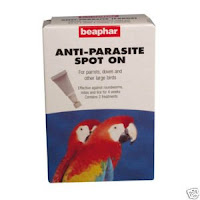
Skin parasites are generally uncommon in pet parrots that are housed indoors, but convenient preparations, such as anti-parasite spot-on treatment, are commercially available for small, medium and large parrots to prevent external parasites such as skin mites or lice, and also combat internal parasites such as round worms.

Toxins
There are many common substances that we use daily in our homes that could cause an allergic reaction, or high levels of discomfort to your parrot that would induce stress related feather plucking. Cigarette smoke, air fresheners, and cooking sprays are all toxic to parrots and may cause high levels of distress.

Boredom & Loneliness
Parrots are very intelligent, sociable by nature, and highly active birds. If they lack stimulation or companionship, they may become bored and lonely, resulting in feather plucking behaviour. Provide your parrot with a variety of toys, ranging from toys that are mentally stimulating, such as shakers, food balls, and puzzles; to those that provide physical exercise, such as swings, ropes and ladders. Spend quality time with your parrot, providing interaction and companionship. If your parrot has to spend the day alone whilst you are at work, it would be kinder to consider getting an avian companion for him to communicate with in your absence to prevent loneliness and depression setting in.

Prevention & Cure
Feather plucking can be prevented, and usually cured, by providing your parrot with plenty of mental and physical stimulation, a healthy diet, a healthy environment, and lots of love and attention. Those are the ingredients for a happy, healthy parrot.

Sunday, 18 September 2011

Choosing a Cage for Your Pet Conure


It can be quite confusing choosing a cage for your pet conure, as there are a wide variety of cage types on the market, and determining which one is the most suitable for your bird is often quite a challenge. Although there are many different species of pet conures, they all have similar housing requirements. They need a spacious, sturdy, and durable cage that will stand up to the abuse of a conure's strong beak, which is used as an aid in climbing. You should strive to provide your bird with the biggest cage you can afford and comfortably accommodate in your home. Special care should be taken when choosing a cage to ensure that the cage bars are non-toxic. Galvanized metal, or stainless steel cages are recommended. Stainless steel food bowls are better than plastic bowls, as they will not only last longer, but they are easier to clean and more hygienic. Decide whether you wish to be able to move the cage around the house with ease. A large cage on castors is easier to move around than one without wheels.

CAGE SIZE

Ultimately, the size of the cage required will be determined largely by the type, and size of your pet conure. Smaller conures don't need as big a cage as larger conures, but will certainly be grateful for as much as you can give them. Generally bigger cages tend to have a wider bar spacing, so if you are shopping for a cage for a small conure, it is important that you take note of the bar spacing, as this needs to be narrower than the bar spacing on cages for larger conures. In you efforts to provide your feathered friend with as big a cage as possible, this is something that may easily be overlooked.


Recommended Minimum Cage Size and Bar Spacing:


Small conures (Green Cheeked, Maroon Bellied, Black Capped, Dusky, Half Moon, Peach Fronted) minimum cage size 20 inch wide x 20 inch deep with a 3/8-1/2 inch bar spacing.
Medium conures (Sun Conures, Jenday Conures, and Nanday Conures) 24 inch wide x 24 inch deep with a 1/2-3/4 inch bar spacing.
Large conures (Patagonian Conures) 30 inch wide x 30 inch deep with a 3/4-7/8 inch bar spacing.

CAGE TYPES

Flight cages offer extra length to allow your bird free flight across the cage. Double flight cages not only provide extra length for flight, but also offer extra height for climbing and provide more room for toys, or to hang a cosy bird hammock for your bird to snuggle into when he goes to roost. Flight cages are usually fitted with narrow spaced bars and narrow gauge wire, so are more suitable for small conures.

Dome-top cages offer extra height giving your bird more space for climbing, or to place toys or a sleeping hammock, making them ideal if your bird spends a lot of time in his cage while you are at work.

Montana Finka II Parrot Play Cage
Play-top cages are fitted with an external on-board activity area on top of the cage. The built-in play-gym often comes complete with toys, swings, ladders, extra perches, and food and water bowls, which can be very handy if your conure is likely to spend a lot of time out of his cage.

Aviary cages are large indoor or outdoor cages that provide the most natural environment for a caged pet bird. Their large size can accommodate natural branches, lots of toys, making them ideal for both small and large conures. Aviary cages range in size, and can be fitted on a patio, in an entrance hall, or in a sheltered outdoor area. They can provide an interesting feature and focal point to an indoor or outdoor area, but they obviously have some limitations in terms of both space and financial outlay required.

Ultimately, when choosing a cage for you pet bird, you need to select a cage that is most suited to your conures requirements, and that will best fit into your lifestyle, while at the same time making your birds comfort a top priority.